

MCP Marine at Navalshore 2026: Innovation against biofouling and corrosion
From August 18 to 20, 2026, MCP Marine attended Navalshore 2026, the 20th edition of Latin America’s largest maritime industry trade show and conference, held at ExpoRio Cidade Nova in Rio de Janeiro. At booth C-18, we welcomed customers, partners, and professionals from the naval and offshore sectors to showcase solutions for corrosion protection, biofouling […]
Navigation between river and sea: what the hull paint and the ICCP reveal during dry docking
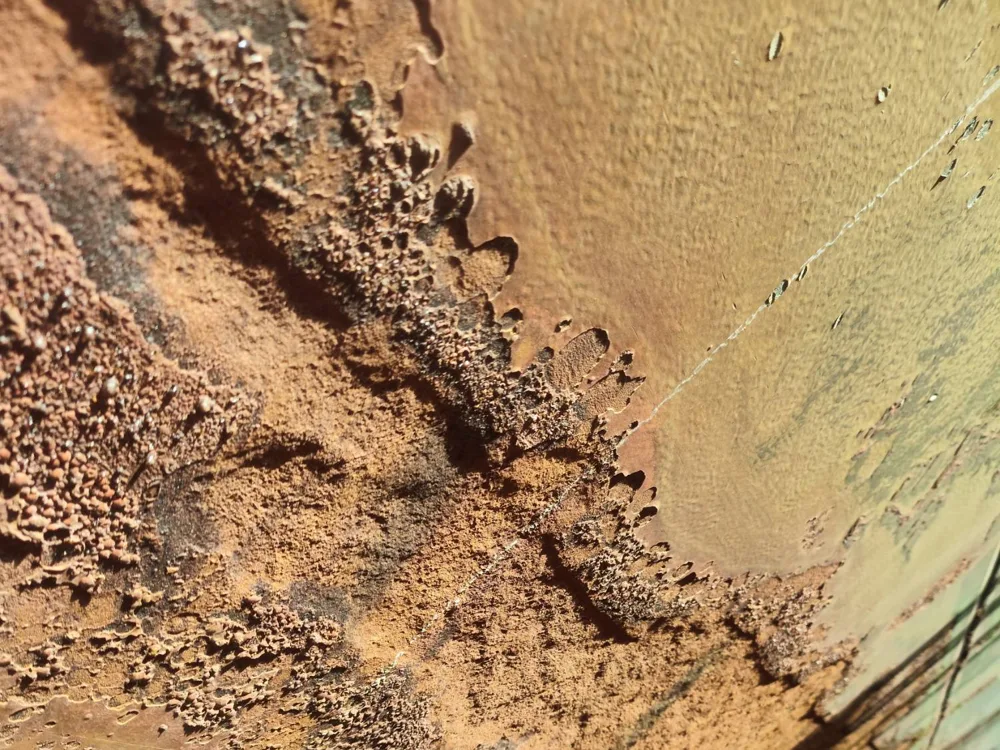
Coastal vessels traveling up the Amazon’s rivers operate under two very different conditions: the open sea and the river. And the river has changed. In October 2023, the Rio Negro reached 12.70 m in Manaus; in October 2024, it stood at 12.11 m, the lowest level since measurements began in 1902. With low river levels […]
Ultrasonic Anti-Fouling: How It Works and When to Use It on Your Ship
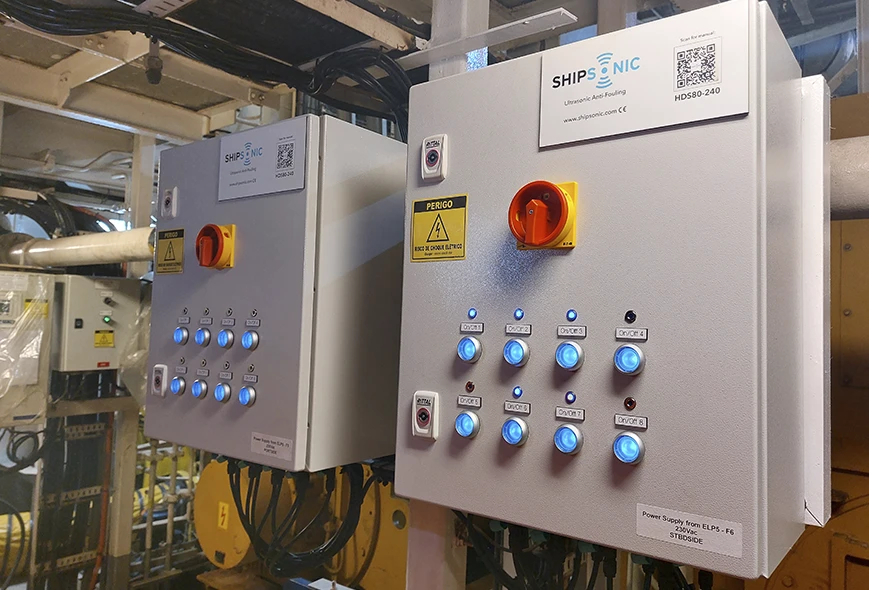
Barnacles, mussels, and algae don’t discriminate: they attach themselves to the hull, seawater intakes, filters, and box coolers. The result is evident in the engine room, where heat exchangers lose efficiency, temperatures rise, and unscheduled shutdowns for cleaning occur. There are three commonly used methods to prevent this on board: MGPS (copper and aluminum/iron anodes), […]
MGPS: How It Works and 7 Signs That the System Needs Maintenance
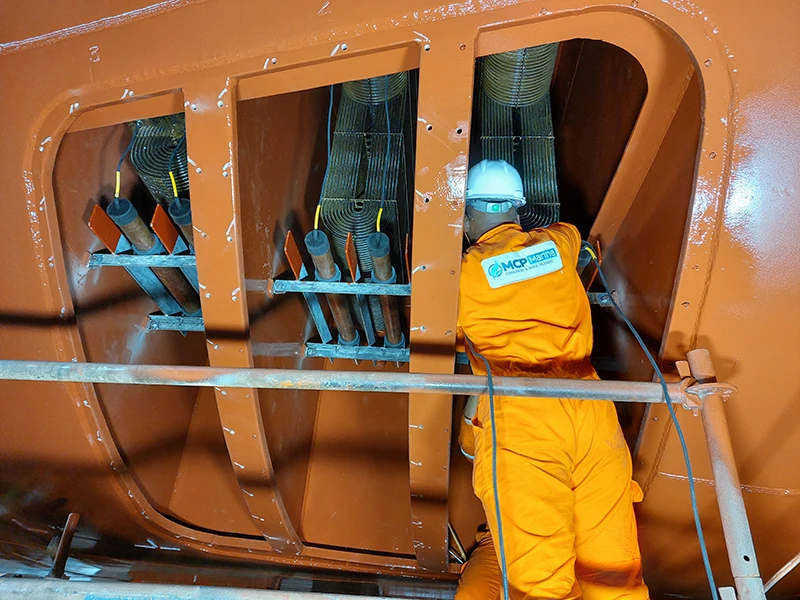
The MGPS (Marine Growth Prevention System) protects a ship’s saltwater systems from mussels, barnacles, and algae. When it works properly, no one even notices it’s there. When it fails, the first warning is usually an overheating heat exchanger or a clogged filter at the worst possible moment. Here’s how the system works and what signs […]
ICCP or Sacrificial Anodes: Which Cathodic Protection System Should You Choose for Your Ship?
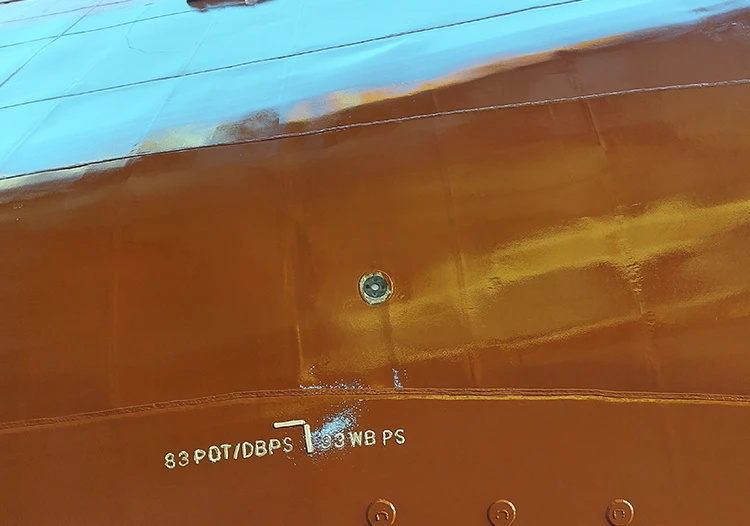
Every steel hull submerged in seawater corrodes. Cathodic protection exists to reverse this process: instead of the steel losing metal, it begins to receive electrons from another source. There are two ways to do this: sacrificial anodes (also called galvanic anodes) and impressed current cathodic protection (ICCP). Both methods work. The choice depends on the […]
Effects of Corrosion in Marine Environments

The marine environment is recognized as one of the most aggressive settings for metallic materials. The combination of physical, chemical, and biological factors creates ideal conditions for the initiation and progression of corrosion. In marine structures, the severity of corrosion is directly related to the zone in which the material is located, and it is […]