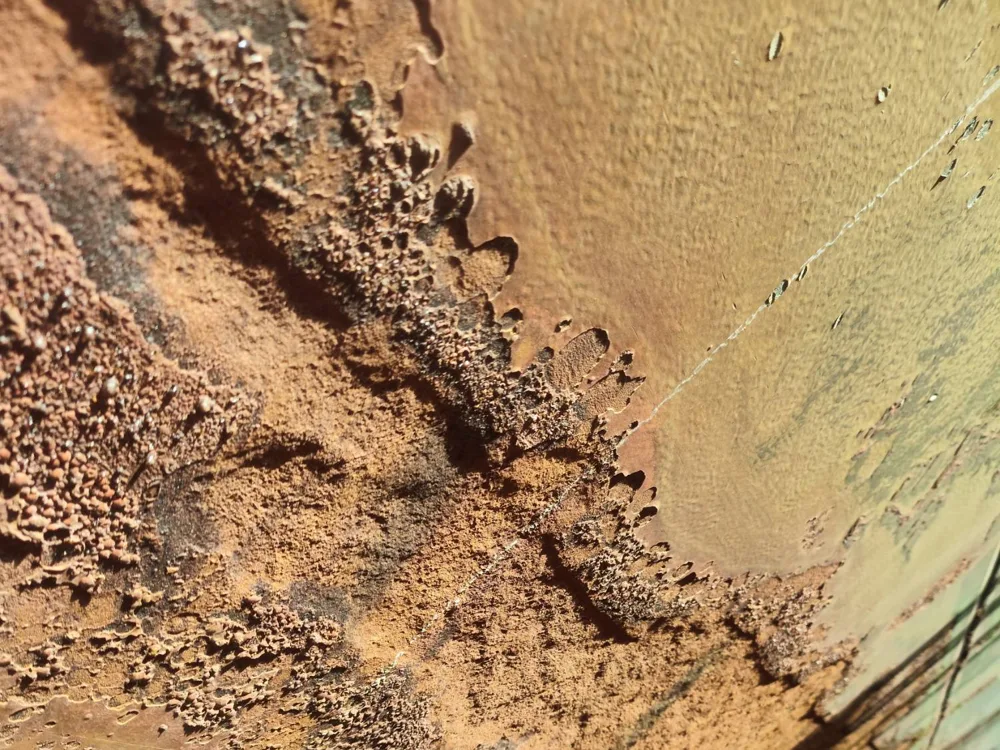


Barnacles, mussels, and algae don’t discriminate: they attach themselves to the hull, seawater intakes, filters, and box coolers. The result is evident in the engine room, where heat exchangers lose efficiency, temperatures rise, and unscheduled shutdowns for cleaning occur. There are three commonly used methods to prevent this on board: MGPS (copper and aluminum/iron anodes), electrochlorination, and ultrasound. In this article, we explain how the ultrasonic anti-fouling system works, where it’s best suited, and how it compares to the other two methods.
How Ultrasound Prevents Fouling
Fouling starts small. Barnacle and mussel larvae and algae spores look for a surface to attach to, and within a few days, they begin to form a colony.
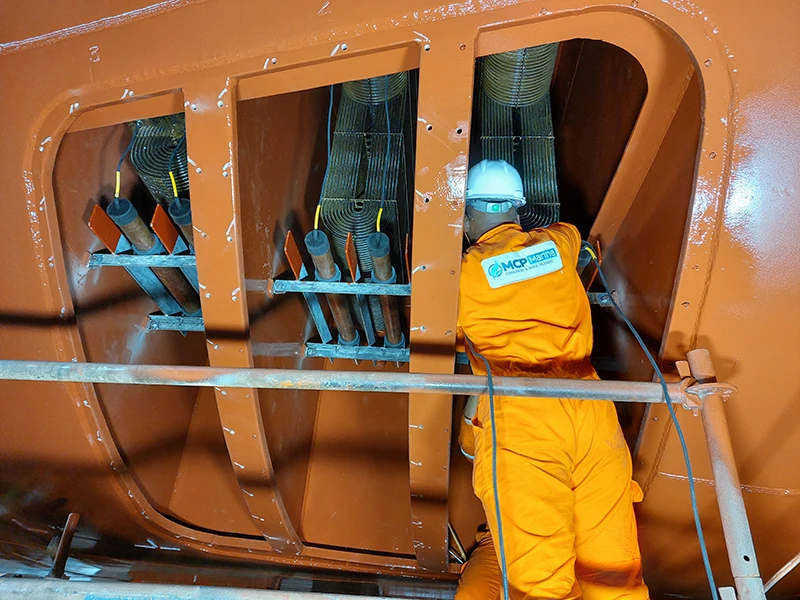
The ultrasound system uses transducers installed on the inside of the structure: on the sea chest plate, in the box cooler, on pipes, or in areas of the hull. They transmit high-frequency vibrations to the metal and to the water in contact with it. This vibration prevents larvae and spores from attaching; the organisms are unable to latch on and are carried away by the water.
Three important points:
- It’s prevention, not cleaning. Ultrasound prevents fouling from starting. If the surface is already fouled, you should clean it first and then turn on the system, preferably right after docking or cleaning.
- It’s a physicist. It does not use biocides, chlorine, or copper anodes, and it does not produce chemical effluent.
- You need to stay tuned. Protection depends on the system operating continuously. Therefore, fault alarms and periodic checks of the transducers are part of the routine.
Where Ultrasound Works Best
Ultrasound is most effective at critical, well-defined points where fouling causes the most damage:
- Box coolers and submerged heat exchangers: fouling buildup between the tubes reduces heat transfer and is difficult to clean without docking.
- Seawater intakes and filters: prevent clogging of the water intakes.
- Saltwater lines and circuits: in sections where fouling tends to build up.
- Hull areas: in specific areas defined in the design.
Since the installation is done from the inside, without cutting into the hull, in many cases the system can be installed while the vessel is in operation.
Ultrasound, MGPS, or electrochlorination?
| Ultrasound | MGPS (anodes) | Electrochlorination | |
|---|---|---|---|
| How it works | Vibration that prevents larvae from attaching | Copper and aluminum/iron ions released into the water in the nets | Hypochlorite generated from seawater |
| Where it provides protection | Specified areas: box coolers, seawater intakes, sections of the piping system, hull areas | The entire seawater system downstream of the anodes | The entire metered seawater system |
| Chemicals in Water | No | Low-concentration metal ions | Residual chlorine |
| What consumes | Electricity | The anodes, which are replaced periodically | Electricity and cell maintenance |
| Point to Note | This serves as a preventive measure; the surface must be clean to begin with | Anode current and consumption must be monitored | Monitor dosing and residual chlorine levels |
There is no single answer. On many ships and platforms, the best solution is a combination: MGPS or electrochlorination protect the entire system, and ultrasound targets the areas with the heaviest fouling, such as box coolers. The choice depends on the type of vessel, its operating profile, the water in which it operates, and what is already installed on board.
If your vessel already has MGPS, it’s worth checking out the 7 signs that your MGPS needs maintenance before you consider switching to a different technology. To learn about each solution: MGPS/ICAF anti-fouling systems and electrochlorination.
Shipsonic

Shipsonic is an ultrasonic anti-fouling system developed by Delta Systems B.V., a Dutch company that provides environmental solutions for the naval and offshore industries. The technology has been on the market since 2006 and is manufactured in the Netherlands. It is recommended for box coolers, seawater intakes and filters, seawater lines, and hull areas, featuring internal installation and quick commissioning. MCP Marine supplies and supports Shipsonic in Brazil. See the details on the Shipsonic ultrasonic anti-fouling system page.
How to Decide: Questions We Ask During the Evaluation
- Where is the buildup causing a problem today? Box cooler, sea chest, filter, strainer, or hull.
- What system is already installed on board, and what condition is it in? MGPS, electrochlorination, or neither.
- Does the vessel remain stationary for long periods of time? Ships that are stationary and warm water cause faster buildup.
- Are there any environmental restrictions on the use of copper or chlorine in the operating area, or are there any customer policies regarding this?
- When is the next blood test? This is the best time to clean the surfaces and start the protection process from scratch, although the installation can also be done while the facility is in operation. See the services listed in the docking section.
Frequently Asked Questions
Does ultrasound remove existing tartar?
No. It’s a preventative measure. The surface must be cleaned first, and the system then prevents the buildup from returning.
Does ultrasound replace MGPS?
It depends on the situation. In some cases, such as with box coolers, it may be the primary solution. In large systems, it usually works best in combination with MGPS or electrochlorination.
Do you need to dock it to install it?
In many cases, no, because the transducers are installed on the inside. Feasibility is confirmed during the technical evaluation.
Is ultrasound harmful to marine life or the crew?
The system operates on the surface of the structure and does not use chemicals. The operation is silent for the crew.
Contact MCP Marine
MCP Marine supplies and maintains Shipsonic ultrasonic anti-fouling systems, MGPS/ICAF systems with K.C. LTD anodes and electrochlorination systems, and services systems from any manufacturer, with a team led by professionals with over 16 years of experience in the naval and offshore sectors. For a technical evaluation, contact us: WhatsApp +55 21 99512-0824 or +55 21 2088-8137.
By André Macena, Project and Sales Director at MCP Marine, with over 16 years of experience in naval and offshore systems.